
Balloons
Contributor Drew Zandonnella-Stannard reveals the grief, the anger, the immense love and the continuing belief in all that cannot be explained that is required in caretaking.


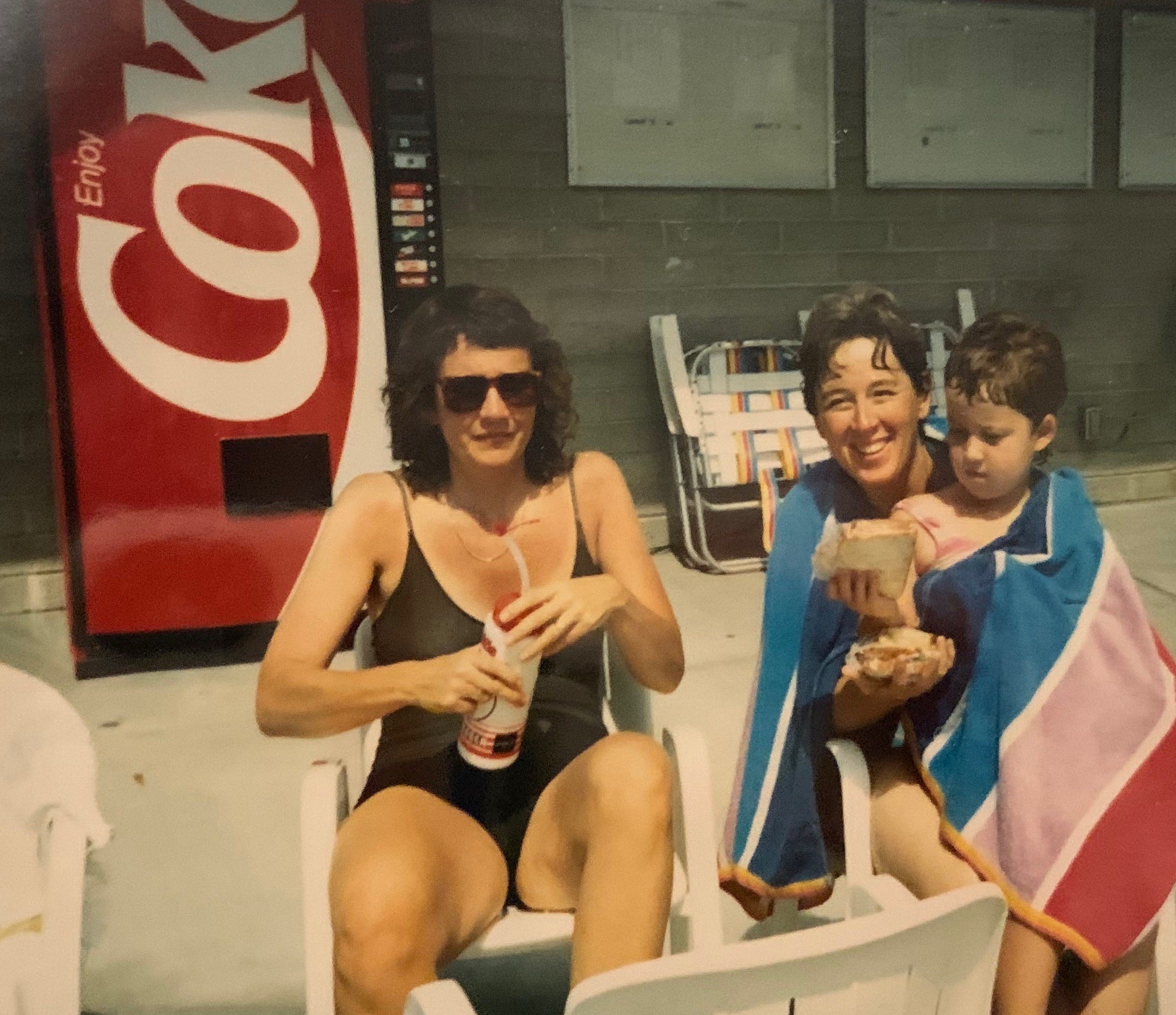
There are things I need to believe. I am working on a list.
I need to believe that my mothers are immortal. I need to believe that the body can heal itself, that love is a cellular event, and that somewhere in the universe there is a magic that protects the people we cannot afford to lose. I need to believe that “live, laugh, love” is one of the most profound statements of our lifetimes. In September, I texted a friend that I was one unprecedented event away from getting it tattooed on my body. In December, an oncologist pulled up a CT scan and showed us what pancreatic cancer looks like when it’s already made other plans. White spots scattered across my mother’s lungs like a constellation. The same stars my daughter falls asleep under every night, projected onto her ceiling by a small plastic astronaut standing watch in the dark.
My mother, Leesha, has always believed in the impossible. This is one of the things I love most about her, and one of the things that is currently making me want to lie down on the cold floor of a CVS and never get up.
When I was six, she spent months visualizing us winning the Publishers Clearing House sweepstakes. Not hoping. Manifesting. Affirming. She said it with the certainty of someone who had already decided to take the lump sum. I believed her completely, the way children believe in things that adults have stopped allowing themselves to want. I had a whole picture of it: the balloons, Ed McMahon at our door, the van pulling up to our house in North Seattle with a check large enough to change everything. I’m not sure I ever fully recovered from the slow understanding that followed, the world containing less magic than I’d been promised, and less mercy. I think about that feeling now when she insists, with some irritation at any implication otherwise, that she is perfectly fine. That all will be well.
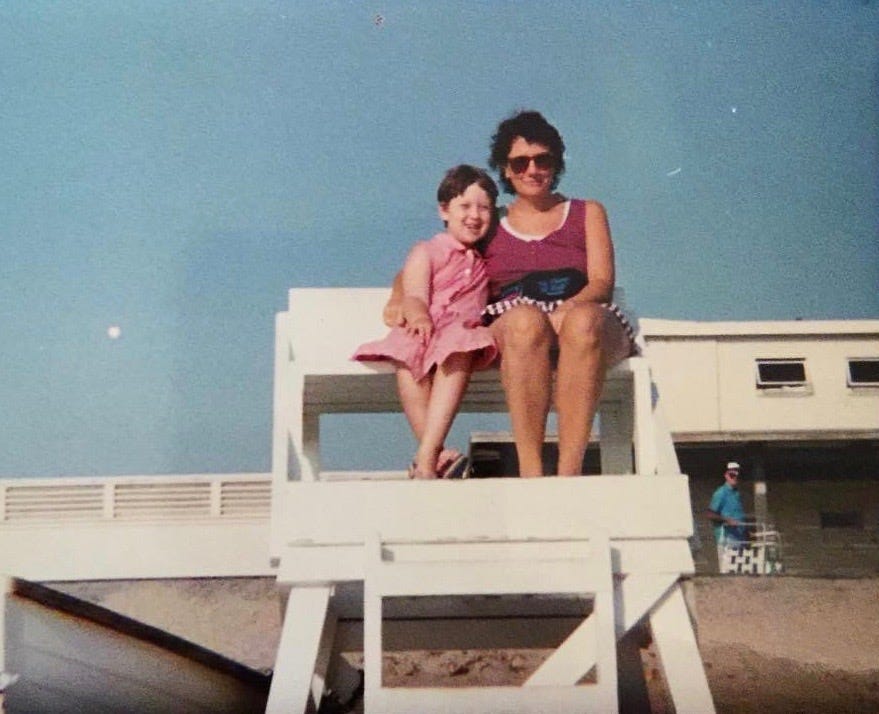
This is a woman who left a marriage, moved to Seattle, came out, and rode a motorcycle through the steep hills of the city before she met my other mother, Mimi, while they were both driving electric trolleys. They fell in love in uniform. Leesha decided she wanted to restore a vintage Danish coffee roaster. Then, open espresso carts. A coffeehouse. A roastery. Mimi conspired happily alongside her. There was always something else to build, always something they didn’t want to miss. They looked at the very particular problem of how to bring a child into the world without a husband or a template or a legal framework that recognized their family as real, and decided that was fine. They would figure it out. They always figured it out.
These are women who have always moved through the world like the balloons are coming.
In the waiting room at Swedish Hospital, I held Leesha’s hand the way she has always held me, which is the way you hold someone you made from scratch, even when you didn’t, technically, make them from scratch.
People used to tell us we looked alike. You can believe anything if you want to badly enough. Leesha and I don’t share biology. We share something else, something I don’t have a clean word for, that lives in the body anyway, that shows up in waiting rooms and hospital corridors and in the particular way she still calls me Drewji when she thinks I’m scared, which I am. I always am.
She held me in a similar waiting room when I was just a few weeks old. My mothers had brought me in for a checkup, and while Mimi stepped away to the restroom, Leesha sat with me as I began to stir. A woman nearby struck up a conversation. How old? How was the birth? Leesha answered the way she always does, direct and without apology. They chatted until Mimi came back, took me from Leesha, and began to nurse me. The woman got up and walked away without a word.
People used to tell us we looked alike. You can believe anything if you want to badly enough. Leesha and I don’t share biology. We share something else, something I don’t have a clean word for, that lives in the body anyway, that shows up in waiting rooms and hospital corridors and in the particular way she still calls me Drewji when she thinks I’m scared, which I am. I always am.
Everyone always wanted to know who my real mother was. I never had a satisfying answer, not because it was difficult, not because it was a competition, but because it was the wrong question entirely.
The self-help guru Louise Hay believed you could heal your body with your mind. A sore throat meant you felt silenced. Cancer meant unresolved resentment. The cure was affirmations, self-love, the persistent insistence that you deserved to be well. In the mid-80s, she became a controversial figure in the AIDS crisis, running support groups for men who were dying, teaching them that if they loved themselves enough, their bodies might relent.
Fuck Louise Hay. I mean this sincerely. I have Crohn’s disease and autoimmune arthritis, conditions I likely inherited from somewhere in my father Ron’s biological family, none of whom he ever knew. He was adopted, showed up imperfectly for me until he died of AIDS in 1997, and left before I could ask him much about his body and what it carried. I did not think my way into inflammation. I did not fail to love myself into a flare. The idea that the body is a report card for the mind is a particularly cruel kind of magic, the kind that finds the pleading desire in people, the prayer just underneath the surface of the desperate and the grieving, and charges admission.
And yet. When I watch my mother visualize and affirm and insist, I recognize something in it that I can’t quite bring myself to dismiss entirely. It is the same thing that drove two women to carry a baby food jar of sperm across the West Seattle Bridge, trying to make a baby the only way they knew how, and believe, with complete conviction, that it would work. That the world would make room for what they needed.
It did. It does. It has to.
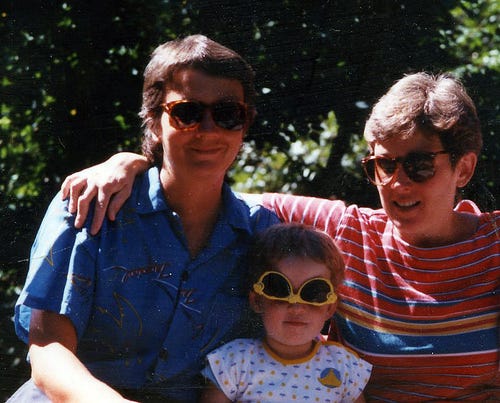
When my daughter Frida was born, Leesha held her and kept saying, “I have to remind myself she’s not you.” Frida is almost eight now. She was a late walker, scooting everywhere on her butt until she was nearly two, perfectly capable of chatting with us in full sentences the whole time. When she finally took her first steps, she looked at me and announced, matter-of-factly, “I decide to walk.”
She goes to sleep every night under a sky full of stars.
Fetal cells cross into the mother’s body during pregnancy and stay there, sometimes for the rest of her life. The mother’s cells do the same in reverse. They persist. They migrate to sites of injury. They remember.
Leesha and I don’t have this. We never will. When the oncologist mentioned genetic testing and how it would benefit our family, we had to explain that I wasn’t her biological daughter. The room absorbed this information and moved on. There is no biological record of the two of us in each other. Nothing in my body that is technically hers.
When I watch my mother visualize and affirm and insist, I recognize something in it that I can’t quite bring myself to dismiss entirely. It is the same thing that drove two women to carry a baby food jar of sperm across the West Seattle Bridge, trying to make a baby the only way they knew how, and believe, with complete conviction, that it would work.
Everyone always wanted to know who my real mother was. I never had an answer because it was the wrong question entirely. The right question is what crosses over. What persists without permission. What migrates toward injury because it has no other option.
I think about a woman getting up and walking away from something she didn’t have a word for. I think about a small plastic astronaut standing watch in the dark, throwing stars onto the ceiling so my daughter can fall asleep believing the night is full of beautiful things.
There are things I need to believe. I am still working on the list.
Drew Zandonella-Stannard is a writer, editor and mother living in Seattle with her family (including mothers Leesha and Mimi). You can follow her on Substack at Drew Zandonella-Stannard .
 | A guest post by
|